

Rope Access and Mesh Installation: Modern Slope Stabilisation from the Alps to Africa
Across the world, infrastructure is increasingly being built in challenging terrain — steep mountain passes, deep open-pit mines, and unstable rock slopes. In these environments, rockfall protection and slope stabilisation are critical to protecting workers, communities, and infrastructure.
Over the past two decades, a powerful combination of rope access techniques and high-strength steel mesh systems has emerged as one of the most effective methods for stabilising hazardous slopes.
This approach is widely used in mountainous regions across Europe and is now increasingly being adopted in Africa’s mining and infrastructure sectors.
Lessons from Europe’s Mountain Infrastructure
Countries such as Switzerland, Austria, and Italy face constant rockfall hazards due to steep alpine terrain and seasonal weather cycles.
To protect highways, railways, and alpine villages, engineers have developed sophisticated rockfall protection systems that combine:
- High-tensile steel mesh
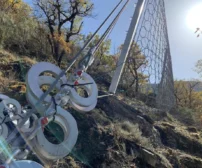
- Rock anchors and soil nails
- Flexible barrier systems
- Rope access installation methods
These systems are commonly installed along mountain roads and railway corridors where traditional machinery simply cannot operate safely.
In the Italian Alps, for example, rope access crews regularly install mesh and rockfall barriers along steep rock faces above major transport routes. The ability to safely position technicians directly on the slope allows precise installation without the need for large scaffolding or access platforms.
Why Rope Access is Transforming Slope Stabilisation
Traditional slope stabilisation methods often required heavy scaffolding, cranes, or earthworks to create access to unstable slopes. These methods can be slow, expensive, and environmentally disruptive.
Rope access techniques have changed this dramatically.
Using specialised climbing systems, trained technicians can safely move along steep slopes while installing anchors, bolts, and mesh systems exactly where they are needed.
This approach offers several advantages:
Access to extreme terrain
Technicians can safely work on slopes where vehicles and machinery cannot reach.
Faster installation times
Rope access teams move efficiently across large slope areas.
Reduced environmental impact
Minimal disturbance to surrounding terrain or vegetation.
Improved safety control
Modern rope systems include multiple redundancy safety systems and strict operational procedures.
Mesh Systems: Containing Rockfall and Surface Instability
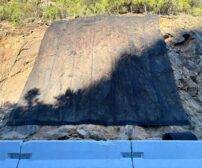
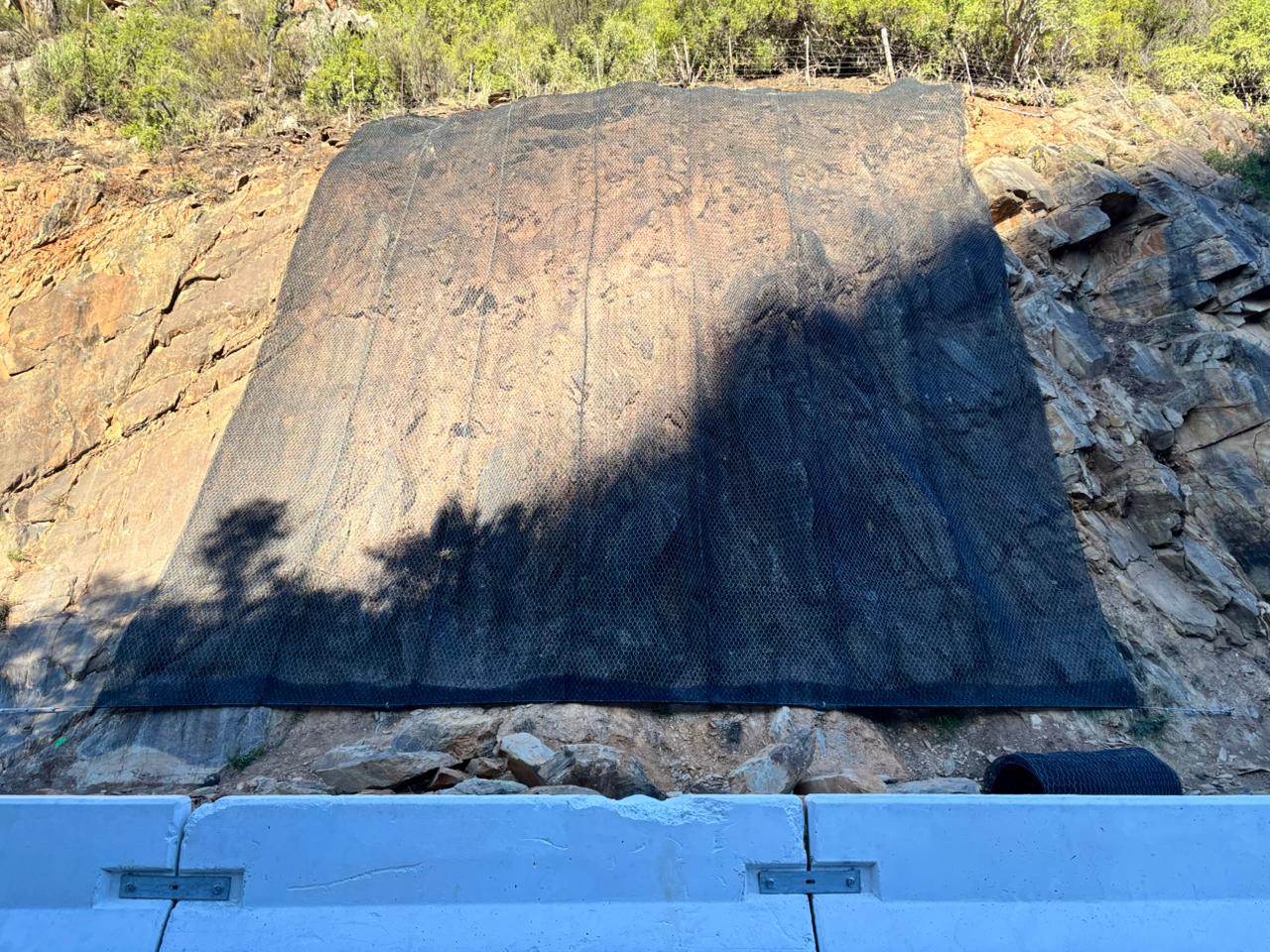
Mesh systems are used to contain loose rock and soil, preventing rockfall events that could damage infrastructure or endanger workers.
Modern mesh systems are designed to perform under significant loads and often work in combination with anchors or soil nails.
Typical mesh stabilisation applications include:
- Rock slope stabilisation along highways
- Highwall support in open-pit mines
- Protection of railway corridors
- Stabilisation of weathered rock slopes
- Erosion control on embankments
In many cases, mesh systems act as a first line of defence, preventing loose material from accelerating downslope.
The Growing Demand in Africa
As infrastructure and mining projects expand across Africa, the need for advanced slope stabilisation methods is increasing.
Countries with large mining and infrastructure developments — such as South Africa, Democratic Republic of the Congo, and Zambia — often face similar challenges to mountainous regions in Europe.
These include:
- Highwall instability in open-pit mines
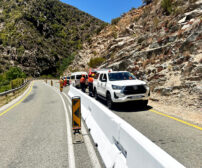
- Road cuttings through rock formations
- Infrastructure development in steep terrain
- Weathered rock and erosion risks
As a result, rope access mesh installation methods are becoming increasingly common on African engineering projects.
At Next Level IMS, rope access installation and mesh reinforcement form part of our specialised slope stabilisation services — delivering safe, engineered solutions for mining, infrastructure, and civil projects across South Africa and the African continent.
Combining Engineering with Skilled Installation
While the design of slope stabilisation systems is critical, successful implementation depends heavily on the skill of the installation teams.
Mesh systems must be carefully anchored, tensioned, and secured to ensure they perform correctly during rockfall events.
This requires:
- Precise drilling and anchor placement
- Controlled installation procedures
- Continuous safety supervision
- Experienced technicians working in challenging terrain
A Modern Approach to Slope Safety
From the Alpine highways of Europe to the mining highwalls of Africa, rope access and mesh installation have proven to be a reliable and efficient method of stabilising hazardous slopes.
As infrastructure projects push further into complex terrain, these techniques will continue to play a crucial role in protecting both people and critical infrastructure.